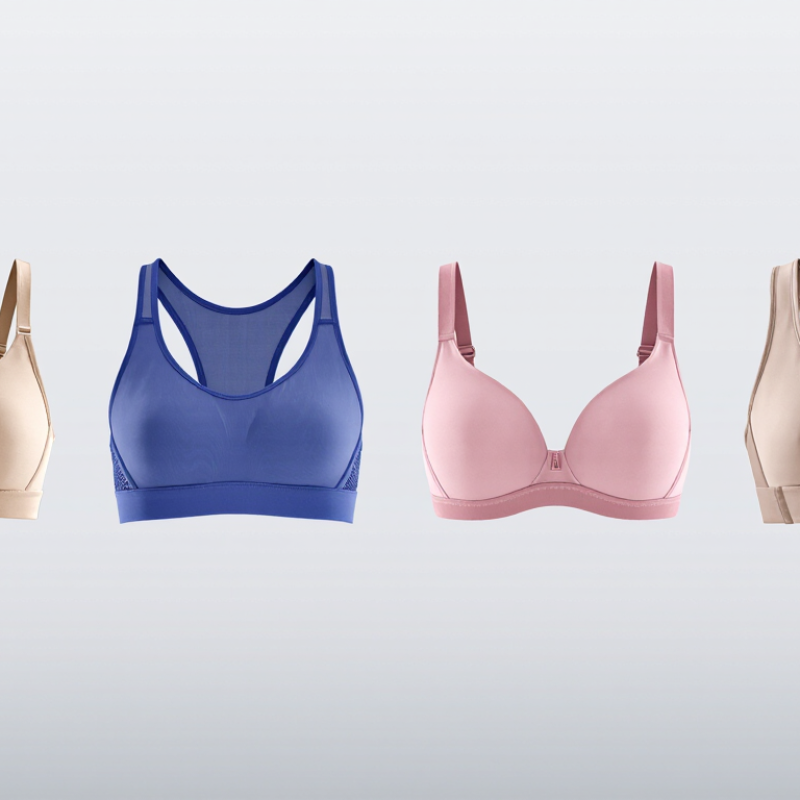
A Seamless Bra can look simple on a hanger: smooth fabric, clean edges, no visible seams. Its performance is more complicated. Support, stretch recovery, coverage, and band stability all affect how it feels after hours of wear. The right style depends on the wearer, not a trend alone.
Market reports offer useful context, but not a perfect answer. Grand View Research’s lingerie market analysis tracks a broad category, rather than isolating seamless bras by construction or fit. McKinsey and Business of Fashion’s State of Fashion 2025 also describes a value-conscious apparel market, where comfort and perceived quality matter to shoppers. These reports help explain demand; they do not prove that one bra type suits everyone.
Fit matters most. Kimmay Caldwell, a lingerie educator and fit expert, emphasizes fit and comfort in her consumer guidance; the principle can be summarized this way: “A bra should work with your body, not ask your body to work around it.” This is a paraphrase, not a verified verbatim quotation. Small details tell a lot: a band that stays level, cups that lie flat, and fabric that does not roll beneath a shirt. Still, a soft feel in the fitting room may not predict a full day of wear. This guide compares the top Seamless Bra types for 2026, including everyday, sports, wireless, and smoothing styles, while noting where comfort claims deserve a closer look.
Seamless bras are usually made on circular knitting machines, which form a garment in a continuous tube. This reduces side seams and can create a smooth surface beneath fitted shirts. The machine varies stitch density across zones, giving some areas more stretch or support. For example, a firmer knit beneath the bust can help the band feel stable, while softer stitches allow movement around the ribs. Small changes matter.
Cups, straps, and closures may still be added after knitting. Bonding joins fabric edges with heat and pressure instead of conventional stitching. It can leave a flatter finish, especially around necklines and leg openings. But bonded edges are not automatically stronger or more comfortable. Their performance depends on fabric, adhesive, construction, and care. The trade-off is less tidy than it sounds.
Fit still decides whether a seamless bra works. A band should sit level and feel secure without digging in; cups should contain breast tissue without gaping or spilling. Try raising your arms and taking a deep breath. Watch for rolling, pinching, or fabric that pulls sharply across the chest. A smooth look can hide pressure, so check comfort after several minutes, not just in the fitting room. Sizing can vary between knit structures, and a tiny wrinkle may be harmless. The right choice balances support, softness, and the way you actually move.
Seamless bras are not one design. The term usually describes smooth, low-profile construction, often made with circular knitting or bonded edges. Grand View Research’s 2024 lingerie market analysis estimated the global market at about $94.4 billion in 2023, reflecting broad demand for intimate apparel—not proof that one bra style suits everyone. Fit still depends on band tension, cup shape, and how the fabric moves.
A T-shirt bra gives a rounded silhouette beneath thin jersey; check that its cups lie flat when you lift your arms.
Wireless styles trade rigid underwires for softer support, though a loose band can still ride up.
Plunge bras have lower center fronts, useful with deep necklines, but their coverage may feel limited on fuller busts.
Bralettes often use stretch panels and lighter structure. Small detail. Seams may disappear, while fabric edges can still show under clingy tops.
Choose by the garment you wear most, then test the bra sitting, reaching, and breathing normally.
Honestly, “seamless” does not guarantee invisible—or comfortable. A slightly imperfect fit check beats relying on a product label.

What Are the Top Seamless Bra Types in 2026?
Seamless Sports Bras by Impact Level: Low, Medium, and High Support
For yoga, walking, and gentle strength work, a low-impact seamless bra should feel soft without shifting as you reach or bend. Look for a wide underband and smooth, bonded edges; seams that rub under the arms can spoil an otherwise comfortable fit. For cycling or dance, medium support usually needs firmer fabric and broader straps to limit bounce during repeated movement. Fit matters. The bra should hold securely without making deep breathing uncomfortable.
Running and jumping call for high support, often through molded cups, a stable underband, and adjustable straps. The Journal of Sports Sciences study by Scurr, White, and Hedger (2010) measured breast movement in 15 women and found that support level affected displacement during running. That is useful evidence, but not a universal sizing formula: bodies and preferred fits differ. Choose a seamless style that stays in place through a few test jumps, with no cup gaps or pinching. Impact labels also vary between manufacturers, so judge the construction and your own movement, not the label alone. Not every “high-support” bra will feel supportive.
| Impact Level | Common Seamless Bra Type | Typical Support Features | Activities That May Suit This Level | Fit and Selection Notes |
|---|---|---|---|---|
| Low impact | Light-support knit bralette or pull-on crop bra | Soft, flexible knit; a wide underband; light compression; minimal or removable padding in some designs | Yoga, stretching, Pilates, walking, and everyday wear | Prioritize comfortable coverage and a band that stays in place without digging in. This level may not provide enough support for running or jumping. |
| Medium impact | Medium-compression racerback or cross-back seamless sports bra | Firmer knit, wider shoulder straps, a supportive underband, and moderate compression; some styles include removable cups | Strength training, cycling, brisk walking, dance, and lower-impact cardio | Look for stable straps and limited movement during activity. Support varies with fit, fabric, design, and individual body shape. |
| High impact | High-support seamless sports bra, often with a structured knit or molded cups | Firm compression, a broad supportive band, secure straps, and, in some designs, molded or separated cup shaping | Running, jumping, court sports, and high-intensity interval training | Choose a close, secure fit that allows full breathing and movement. For greater support, check for reduced bounce during a short activity test; seamless construction alone does not guarantee high support. |
Note: Low-, medium-, and high-impact labels are not standardized across manufacturers. Support depends on the bra’s construction, fit, fabric, and the wearer; use the activity suggestions as general guidance.
During running, breast movement is not merely a comfort issue. Scurr and colleagues reported vertical displacement reaching 15.2 cm during running in their 2009 study. That figure describes measured movement under specific study conditions, not a prediction for every runner. Still, it shows why support deserves attention.
Breast tissue is supported by skin and connective structures, rather than muscle that can actively steady it. Repeated motion may feel uncomfortable, especially during faster runs or longer workouts. A seamless bra can reduce rubbing because it has fewer raised seams, but seamless construction alone does not guarantee enough support. The band should sit level, and the cups should contain breast tissue without digging in. Small details matter.
Fit is personal. A bra that feels secure while standing may shift when you jog, reach, or take a deep breath. Try a few movements before deciding. Compression styles hold the breasts close to the chest; encapsulation styles support each breast separately. Some bras combine both approaches. I find it easy to focus on smooth fabric and overlook the band, which is a useful reminder that appearance is not a support test. Comfort during movement is the better clue.
Choosing a seamless bra starts with the movement, not the trend. For yoga or daily wear, a soft bralette with light support allows comfortable stretching and layering. For running or jumping, look for a supportive design with stable straps and coverage that limits bounce. Compression styles hold the chest close; encapsulation styles support each breast separately. Small details matter. Check for band digging, cup gaps, and straps that slip when you reach overhead. “Seamless” describes construction, not guaranteed comfort.
Fabric affects how a bra feels during activity. Nylon blends often feel smooth against skin, while polyester can dry quickly when the knit is designed to move moisture. Textile Exchange’s Materials Market Report 2024 states that polyester accounted for 57% of global fiber production in 2023. That makes it common, but fiber content alone cannot tell you how breathable a bra will feel. Check the fabric blend and knit, then try it during the activity you actually plan to do.
The market is growing, but a popular category is not a fit guarantee. Grand View Research estimated the global sports-bra market at about $9.8 billion in 2023 and projected an 8.6% annual growth rate through 2030. Treat that as market context, not proof that one type works for everyone. A practical fitting check is simple: breathe deeply, lift your arms, and twist your torso. I may be putting extra weight on this step, but labels can’t show where a seam or band will press on your body.