Leave Your Message

How to Choose the Best Seamless Bra Manufacturer?

Choosing the right Seamless Bra manufacturer affects fit, comfort, durability, and your ability to deliver products consistently. A polished catalog is only a starting point. Look closely at the factory’s knitting equipment, fabric options, finishing methods, and experience with your product category. Ask how it handles support zones, strap placement, and size grading. These details influence whether a bra feels secure without digging into the skin.

Small details matter. A soft sample may still lose shape after washing. Request samples in several sizes, then check stretch recovery, seam transitions, edge pressure, and color consistency. Ask for clear specifications and relevant quality records, and confirm what each test covers. Claims should be supported by documents, not just confident sales language.

Fit takes testing.

A reliable partner should also explain minimum order quantities, sampling costs, production timelines, and how defects are handled. Compare answers in writing, especially when discussing tolerances or changes after sample approval. If communication is vague before an order, resolving issues later may be harder. Still, no checklist can guarantee a perfect match. Your target customer, price point, and design may require trade-offs. This guide outlines practical ways to assess manufacturers, ask sharper questions, and decide whether a supplier’s capabilities match your needs. It favors verifiable details over broad promises, while recognizing that one fitting session cannot reveal every production risk.

How to Choose the Best Seamless Bra Manufacturer?

Define Your Product Requirements and Target Market

Before contacting a seamless bra manufacturer, define the product in measurable terms. Specify intended support, coverage, neckline, strap width, fabric feel, and acceptable compression. Note whether the bra is for daily wear, light exercise, or post-workout layering; these uses require different construction and testing. Share a size range and grading expectations, not just a sample size. Small fit details matter. A firm band can feel supportive on one body and restrictive on another.

Then describe who will buy it and where. Consider climate, preferred price point, shopping channel, and the fit concerns customers mention most. A warm-weather customer may prioritize breathability and quick drying; a fuller-bust customer may need wider straps and stronger recovery. Grand View Research estimated the global lingerie market at USD 91.2 billion in 2023 and projected a 6.1% compound annual growth rate from 2024 to 2030. This broad category figure is not a forecast for seamless bras, but it helps frame market scale. Bring your own customer interviews or sales data, too. Estimates can hide useful details. I would also document what is still uncertain, such as whether a bonded edge stays comfortable after repeated washing. A clear brief gives manufacturers something concrete to quote, sample, and test.

How to Choose the Best Seamless Bra Manufacturer?

Define your product requirements and target market by deciding how many band and cup sizes your first collection will cover.

How to read this: Size-combination counts are calculated by multiplying the band sizes by the cup sizes in each example plan. These are planning examples, not market-demand statistics or a universal sizing standard. Confirm sizing conventions and customer demand in your target market before setting your range.

Assess the Manufacturer’s Seamless Production Capabilities

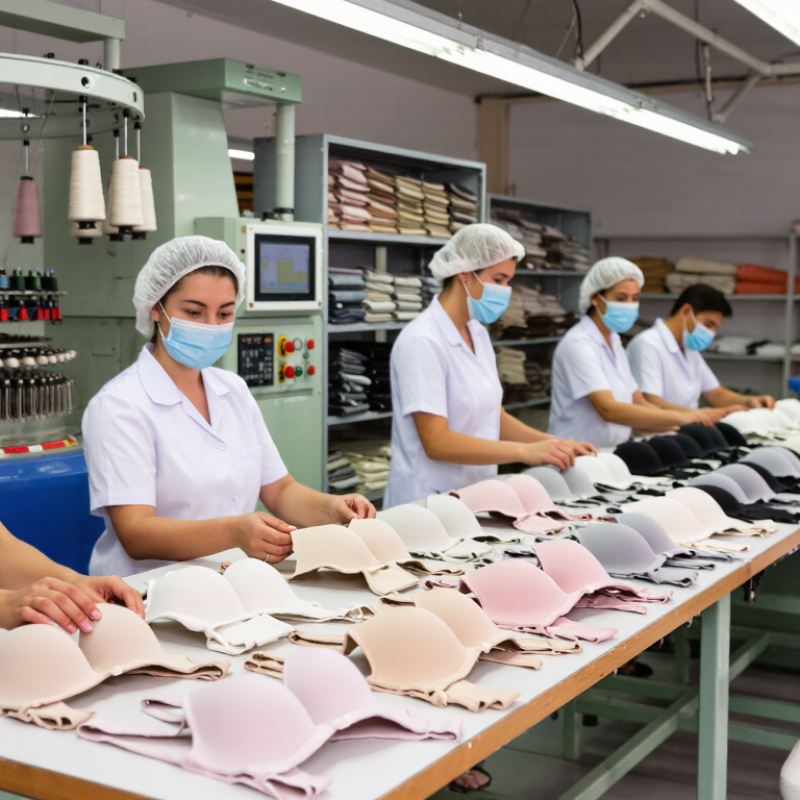
A seamless bra is shaped through controlled knitting, not assembled from many cut panels. When assessing a manufacturer, ask what machines and knit structures they use for your design. Can they adjust stitch density across the cup, band, and side panels? These details affect support, stretch, and edge comfort. Ask to see it.

Review a sample alongside its production specifications. Check whether the cup keeps its shape after stretching, and whether the band recovers without rolling. Run your fingers along the edges; rough transitions or uneven compression can signal problems. A sample may look excellent yet hide inconsistent machine settings, so ask how the factory repeats the same result across a production run. Numbers need context. Request examples of inspection records, defect tracking, and how operators handle a failed check.

Discuss capacity in practical terms: monthly output, setup time, and how many styles can run at once. A factory with high volume may not be the right fit for frequent design changes. Ask whether it can produce a small pilot run before scaling up, and clarify who approves pattern adjustments. Some answers may be less tidy than expected. That is useful information. Compare stated capability with a live production walkthrough, where you can observe fabric feeding, machine calibration, and finished pieces being checked for consistent fit.

How to Choose the Best Seamless Bra Manufacturer? - Assess the Manufacturer’s Seamless Production Capabilities
Capability Area What to Assess Evidence to Request Evaluation Guidance
Knitting Technology Whether the factory operates seamless circular knitting equipment suitable for the required garment structures and yarn types. Machine list, machine specifications, sample panels, and a production-floor walkthrough. Confirm that the available equipment can produce the intended fabric structure, size range, and design details.
Design and Development Ability to translate a brief, reference sample, or technical pack into a workable seamless construction. Development process, prototype samples, pattern or program revision records, and sample lead-time expectations. Look for a clear process for reviewing fit, construction, and design changes before bulk production.
Yarn and Material Handling Experience working with materials commonly used in stretch garments, such as nylon or polyester blends and elastane. Material specifications, supplier documentation, yarn traceability records where available, and test reports. Check that material selection matches the required stretch, recovery, hand feel, and care instructions.
Seamless Construction Options Range of structures and features the factory can make, such as different knit zones, mapped support, and integrated garment details. Comparable samples, construction descriptions, and confirmation of which features are produced in-house. Assess the finished garment rather than relying on a feature list; verify comfort and construction through wear and fit testing.
Size and Fit Development Capability to grade designs across the requested size range and manage fit differences between sizes. Size charts, graded samples, fit-session process, and records of approved fit comments. Request samples in more than one size and confirm how fit corrections are carried into production.
Production Capacity and Planning Available machine capacity, production scheduling, and ability to manage the requested order volume and delivery window. Capacity overview, production plan, stated lead times, and examples of how orders are scheduled. Compare the proposed plan with the order quantity and timeline; ask how delays or capacity constraints are communicated.
Quality Control Inspection procedures for fabric appearance, measurements, workmanship, and finished-garment consistency. Quality-control checkpoints, measurement tolerances, inspection records, and sample inspection reports. Confirm that checks take place during production as well as before shipment, with clear procedures for nonconforming items.
Testing and Compliance Ability to arrange or conduct tests relevant to the product and destination market, such as colorfastness, dimensional stability, or restricted-substance testing. Recent test reports for relevant materials or products, testing scope, and the name of the testing laboratory where applicable. Verify that test methods and results match the specific product requirements; do not assume every test applies to every order.
Bulk Production Consistency Controls for keeping bulk garments aligned with approved samples, specifications, and material lots. Approved-sample procedure, batch or lot records, in-line inspection documentation, and change-control process. Ask how the factory handles changes to yarn, machine settings, or construction after sample approval.
Communication and Documentation Clarity and timeliness of communication from development through shipment. Example production updates, technical documentation, issue-escalation process, and named project contacts. Prioritize a supplier that documents decisions, confirms specifications in writing, and reports problems early.

Evaluate Materials, Fit, and Customization Options

When assessing a seamless bra manufacturer, ask for material specifications, not just a soft hand-feel sample. Textile Exchange’s Materials Market Report 2024 estimates global fiber production reached 124 million tonnes in 2023, making traceable sourcing and clear fiber disclosure practical screening points. Request fabric composition, stretch-and-recovery results, and wash-test records. Then check opacity under bright light, pilling after repeated wear, and whether the fabric snaps back after being stretched. Small details matter. A bra that feels smooth on day one may lose support after several washes.

Fit depends on more than a size chart. Ask how the factory grades cup depth, band tension, and strap placement across sizes. Test samples on different body shapes, then record pressure points and movement, not just appearance. Try reaching overhead. Check the band after sitting. Customization should cover fabric weight, neckline, coverage, color, and size range, with clear limits on minimum order quantities and sample revisions. One point is easy to miss: too many custom options can complicate quality control. I would still challenge a supplier’s “one fit works for all” claim; it sounds convenient, but real bodies vary. Request a revised sample and written measurements before approving production.

Verify Quality Standards, Certifications, and Ethical Practices

Request current quality records, not just a list of certificates. Check who issued each document, which facility it covers, and when it expires. A certificate is a clue, not a guarantee. Confirm that its scope matches the seamless bras you plan to order, since fabric and finished-product requirements may differ.

Ask how the manufacturer tests stretch recovery, colorfastness, and performance after repeated washing. Request recent test reports from a qualified independent laboratory, where appropriate. Inspect pre-production samples for uneven bonding, rough edges, and panels that lose shape when pulled. Then compare those samples with goods from a production run. Small differences matter. Ask how defects are recorded and traced by batch; vague answers deserve a follow-up.

Ethical practices need evidence too. Request the factory location, subcontracting details, and records of worker-safety checks. Ask whether workers can raise concerns confidentially, and how findings are addressed. Audits have limits, so one report cannot show every shift or workday. That is worth remembering. Compare documents with the supplier’s actual production arrangements, and ask for corrective-action records when problems appear. A careful manufacturer should explain gaps plainly, not rush past them.

Compare Costs, Lead Times, and Communication Practices

When comparing seamless bra manufacturers, ask for a cost breakdown, not just a unit price. Separate yarn and elastane, knitting, dyeing, bonding, testing, packaging, and freight. Check minimum order quantities, sample fees, and what happens when a size or color fails approval. WTO data show merchandise trade volume fell 1.2% in 2023 before the organization projected 2.6% growth for 2024. Market conditions shift; ask how long each quote remains valid.

Lead time needs a calendar with milestones: yarn booking, first sample, fit approval, bulk production, inspection, and shipment. UNCTAD’s Review of Maritime Transport 2024 reported container spot freight rates rose about 150% between October 2023 and June 2024. That volatility can affect delivery plans, so request production and transit estimates separately, with a buffer for delays. For a seamless bra, confirm the factory’s capacity for your knit structure and bonding method. A fast sample is not proof of fast bulk output.

Communication is testable. Send a detailed tech pack and ask the manufacturer to flag unclear measurements, tolerances, or color references before sampling. Agree on a response window and one contact for approvals; request dated photos when key stages finish. Small details matter. I would score each supplier on cost clarity, milestone reliability, and response quality, then review the scores after sampling. A neat spreadsheet can still miss rework, and I have sometimes overvalued the lowest quote.